
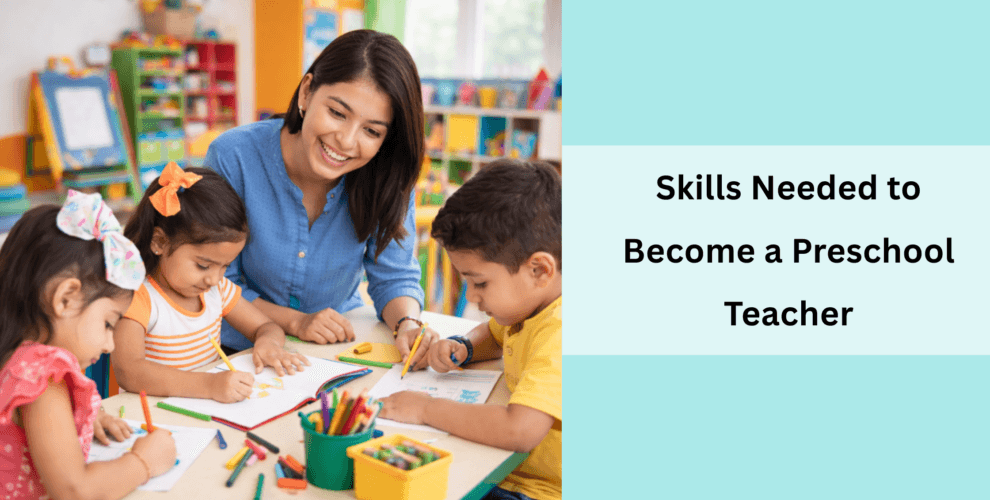
1. Why Preschool Teaching Is a Growing Career in Early Childhood Education
Early childhood education plays a vital role in shaping a child’s learning journey. The early years of a child’s life are crucial for developing cognitive abilities, emotional intelligence, and social skills. Because of this, preschools and early learning institutions are becoming increasingly important in modern education systems.
In recent years, the demand for qualified preschool educators has grown significantly. Many parents now recognize the importance of structured early education, which has increased the need for trained teachers who understand child development and activity-based learning methods. As a result, pursuing a preschool teaching career has become an attractive option for individuals who enjoy working with young children.
To succeed in this field, aspiring educators must develop essential preschool teacher skills such as communication, patience, creativity, and classroom management. These skills help teachers create a positive learning environment and guide children during their early educational development.
2. Understanding the Role of a Preschool Teacher in Early Childhood Education
2.1 What Does a Preschool Teacher Do?
A preschool teacher is responsible for introducing young learners to the basics of education through interactive and engaging activities. Instead of traditional lecture-based teaching, preschool educators focus on play-based and activity-oriented learning methods that make education enjoyable for children.
Teachers in early childhood classrooms help children learn foundational concepts such as alphabets, numbers, colors, shapes, and basic communication skills. In addition, they encourage social interaction among students, helping children develop teamwork, confidence, and emotional awareness.
Preschool teachers also work closely with parents and guardians by sharing feedback about the child’s progress and developmental milestones. Through continuous observation and support, they help build a strong educational foundation during the early stages of childhood development.
2.2 Importance of Preschool Education in Child Development
Preschool education plays a significant role in supporting a child’s overall development. During early childhood, children begin to develop essential skills related to thinking, problem-solving, communication, and emotional expression.
A well-structured preschool environment helps children explore their creativity, interact with peers, and develop independence. Early learning programs also encourage curiosity and imagination through storytelling, art activities, and interactive games.
By creating a nurturing and engaging learning atmosphere, preschool teachers contribute to a child’s cognitive, emotional, and social development, which prepares them for formal schooling in the future.
3. Essential Skills Needed to Become a Preschool Teacher
3.1 Strong Communication Skills for Teaching Young Children
Effective communication is one of the most important preschool teaching skills. Young children often have limited vocabulary and attention spans, which means teachers must communicate clearly and creatively.
Preschool teachers use storytelling, visual aids, gestures, and interactive conversations to explain concepts in a simple and engaging manner. Good communication skills also help teachers interact effectively with parents and guardians by sharing information about children’s learning progress and classroom activities.
3.2 Patience and Emotional Intelligence in Early Childhood Education
Working with young children requires a high level of patience and emotional understanding. Children in preschool are still learning how to manage their emotions, which means teachers must guide them with empathy and calmness.
Teachers with strong emotional intelligence can recognize children’s feelings, respond appropriately to behavioral challenges, and create a supportive learning environment. This skill helps build trust between teachers and students, making children feel comfortable and confident in the classroom.
3.3 Creativity and Activity-Based Teaching Methods
Preschool learning is most effective when it involves creative and engaging activities. Teachers often use storytelling, music, drawing, puzzles, and role-playing games to make lessons enjoyable for young learners.
Activity-based teaching methods encourage curiosity and imagination while helping children understand new concepts through practical experiences. Creative teaching techniques also keep children engaged and motivated, which improves their overall learning experience.
3.4 Understanding Child Psychology and Development
An important skill for preschool educators is understanding child psychology and developmental stages. Every child learns and grows at a different pace, and teachers must recognize these differences to provide appropriate guidance.
Knowledge of child development helps teachers identify behavioral patterns, learning styles, and emotional needs. This understanding allows educators to create learning activities that support each child’s individual growth and development.
3.5 Classroom Management and Leadership Skills
Managing a classroom full of energetic young children requires strong organizational and leadership abilities. Preschool teachers must create structured routines that help children stay focused and participate in classroom activities.
Good classroom management skills help maintain discipline while ensuring that the learning environment remains positive and supportive. Teachers guide group activities, encourage teamwork, and ensure that every child feels included in classroom discussions and tasks.
3.6 Observation and Assessment Skills
Observation is an essential part of preschool teaching. Teachers closely monitor children’s behavior, learning progress, and developmental milestones during classroom activities.
Through regular observation, educators can identify strengths and areas where children may need additional support. This information helps teachers adjust their teaching methods and provide personalized guidance to improve each child’s learning experience.
4. Educational Qualifications Needed to Become a Preschool Teacher
4.1 Basic Eligibility After 12th
Students who wish to pursue a career in preschool teaching typically begin their journey after completing their higher secondary education. Many individuals choose early childhood education programs to gain the knowledge and practical skills required to work in preschools and childcare centers.
4.2 Importance of Professional Teacher Training
Professional training programs play a crucial role in preparing aspiring teachers for real classroom environments. These programs provide structured learning about child development, teaching techniques, and classroom management strategies.
Through specialized training, students gain practical experience that helps them confidently manage preschool classrooms and support young learners effectively.
5. Professional Training Programs for Preschool Teachers
Early childhood education training programs focus on developing both theoretical knowledge and practical teaching skills. One of the most popular training programs for aspiring preschool educators is the Early Childhood Care and Education (ECCE) course.
During ECCE training, students learn important subjects such as child psychology, early learning methods, classroom management, and creative teaching strategies. These programs often include practical teaching sessions that help students gain hands-on experience working with children.
Professional training programs ensure that future educators understand how to create engaging learning environments that support children’s overall development.
6. Career Opportunities After Early Childhood Education Training
After completing early childhood education training, individuals can explore a variety of career opportunities in the education sector. Many graduates work as preschool or nursery teachers in private schools and early learning institutions.
Other career options include working as daycare supervisors, early learning coordinators, or teachers in community-based childcare programs. Some professionals also choose to start their own preschool or daycare center, allowing them to build a successful entrepreneurial career in early education.
7. Growing Demand for Preschool Teachers in India
The demand for trained preschool teachers in India has grown rapidly over the past few years. The increasing number of preschools and daycare centers has created a strong need for qualified educators who understand early childhood learning methods.
Parents today are more aware of the importance of early education and prefer institutions that employ trained teachers. This trend has made early childhood education careers more stable and promising for aspiring educators.
8. Why Professional ECCE Training Is Important for Preschool Teaching
Structured training programs help aspiring teachers understand modern teaching methodologies and classroom management techniques. These programs provide valuable insights into child development and help teachers learn how to create engaging learning environments.
ECCE training also offers practical teaching experience, allowing students to observe real classroom situations and develop confidence in handling young learners. This professional preparation improves job opportunities and career growth in the education sector.
9. Start Your Journey in Early Childhood Education
For individuals who enjoy working with children and want to build a meaningful career in teaching, early childhood education offers excellent opportunities. Developing the right skills and receiving proper training can help aspiring educators succeed in preschool teaching roles.
Professional training programs in Early Childhood Care and Education (ECCE) provide the knowledge and practical experience required to work confidently in early learning environments.
10. Final Thoughts on Becoming a Preschool Teacher
Becoming a successful preschool educator requires more than just an interest in teaching—it requires the right combination of preschool teacher skills, knowledge of child development, and proper professional training. Skills such as communication, patience, creativity, classroom management, and an understanding of child psychology play an important role in helping teachers create a positive and engaging learning environment for young children.
As the importance of early childhood education continues to grow, the demand for trained educators in preschools and daycare centers is also increasing. Students who want to build a rewarding early childhood education career can benefit greatly from enrolling in a structured training program that focuses on both theoretical knowledge and practical teaching experience.
Pursuing a Diploma in Early Childhood Care and Education (ECCE course) helps aspiring teachers develop essential teaching skills, understand child development stages, and gain the confidence required to manage preschool classrooms effectively. With the right training and dedication, individuals can build a meaningful and stable preschool teaching career while contributing to the learning and development of young children.
Start Your Preschool Teaching Career Today
If you want to build a career in early childhood education, Ayush Group of Education offers a Diploma in Early Childhood Care and Education (ECCE) that helps students develop practical teaching skills and understand child development for preschool teaching roles.
Frequently Asked Questions (FAQs)
1. What skills are needed to become a preschool teacher?
Ans. To become a preschool teacher, important skills include communication, patience, creativity, classroom management, and an understanding of child psychology and development.
2. What is the role of a preschool teacher in early childhood education?
Ans. A preschool teacher helps young children develop basic learning skills through activity-based teaching, storytelling, games, and interactive learning methods.
3. Why is early childhood education important for children?
Ans. Early childhood education supports children’s cognitive, emotional, and social development and helps build a strong foundation for future academic learning.
4. What qualification is required to become a preschool teacher after 12th?
Ans. Students can pursue a Diploma in Early Childhood Care and Education (ECCE) after completing 12th to gain the skills required for preschool teaching.
5. What career opportunities are available after completing an ECCE course?
Ans. After completing an ECCE course, individuals can work as preschool teachers, nursery teachers, daycare supervisors, or start their own preschool or childcare center.
6. Where can I enroll in an ECCE course for preschool teacher training?
Ans. Institutes like Ayush Group of Education offer professional ECCE diploma programs that help students develop practical skills for early childhood education careers.
Leave a Reply