
1. Understanding the Growing Demand for DMLT in India
Healthcare is one of the fastest-growing career sectors in India. Hospitals, diagnostic centres, and medical laboratories are expanding every year, increasing the need for trained professionals who can support doctors in diagnosing diseases.
Because of this demand, paramedical courses are becoming very popular among students after the 12th standard. One such course is DMLT — a practical, career-oriented program that allows students to enter the medical field without becoming a doctor.
DMLT is becoming a preferred choice because it offers early job opportunities, hands-on medical skills, and a strong future scope. It is an ideal option for students who want to build a career in healthcare in less time.
2. What is DMLT? A Quick Overview
DMLT stands for Diploma in Medical Laboratory Technology. It is usually a 2-year diploma program designed for students who have completed 10+2 with science subjects.
This course teaches students:
- Blood testing procedures
- Urine & stool analysis
- Pathology lab techniques
- Sample collection & reporting
- Lab safety & hygiene practices
DMLT builds a strong base for working in clinical laboratories and hospitals. It trains students to handle medical samples responsibly and perform accurate tests that help doctors make treatment decisions.
3. Career Opportunities After Completing DMLT
After completing DMLT, students can work in various medical roles in both private and government sectors.
Common job profiles include:
| Job Role | Description |
|---|---|
| Medical Lab Technician | Works in hospitals or labs performing tests and preparing medical reports. |
| Laboratory Assistant | Supports lab operations, handles equipment, and manages reports. |
| Pathology Lab Technician | Assists with tissue testing, biopsies, and disease detection. |
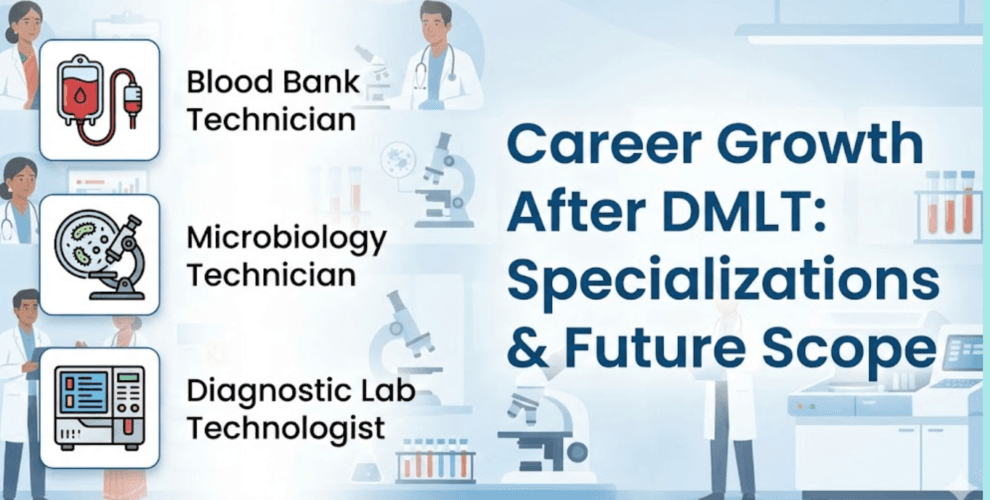
| Blood Bank Technician | Works in blood storage and testing units, managing donor samples. |
| Microbiology Assistant | Supports the diagnosis of infections and sample culture testing. |
| Diagnostic Lab Technologist | Works in private labs analysing reports and operating machines. |
| Hospital & Government Lab Roles | Opportunities exist in medical colleges, public hospitals, and diagnostic centres. |
Job demand for lab professionals is rising rapidly due to growing health awareness and test-based treatment methods.
4. High-Growth Specialisations Students Can Pursue After DMLT
-
Specialisation allows students to build focused expertise in a specific medical domain, increasing earning potential and opening doors to senior-level roles. These advanced pathways help students stay competitive in the rapidly evolving healthcare industry.
Popular specialisations include:
1. Histopathology & Cytology
Deals with tissue testing and cancer screening.
This specialisation helps students understand microscopic analysis, enabling early disease detection. Professionals in this field work closely with pathologists to support accurate diagnosis.2. Blood Bank & Transfusion Science
Focuses on blood grouping, storage, and transfusion safety.
Students learn how to manage blood components, maintain quality standards, and support emergency and surgical units. Skilled technicians play a crucial role in life-saving procedures.3. Microbiology & Infection Control
Supports disease prevention and infection diagnosis.
This area provides hands-on training in identifying bacteria, viruses, and fungi. It is a high-demand field due to increasing focus on infection control in hospitals and labs.4. Clinical Biochemistry
Works with blood chemistry tests such as sugar, cholesterol, and enzymes.
Students gain expertise in biochemical analysers and diagnostic equipment. This specialisation is essential in monitoring chronic diseases and supporting routine health check-ups.5. Molecular Diagnostics
Focuses on advanced diagnostic techniques and genetic testing.
This is one of the fastest-growing fields due to advancements in DNA-based testing, PCR, and personalised medicine. It offers strong career opportunities in research labs and modern diagnostic centres.6. Radiology Add-On Programs
Students can also pursue imaging skills, such as X-ray or lab imaging systems.
These add-on programs allow DMLT graduates to expand into diagnostic imaging, increasing job versatility and opening roles in radiology departments and diagnostic chains.Specialisation brings:
• Better salaries
• Faster promotions
• Higher respect
• Better job security
5. Future Scope of DMLT in Healthcare
The scope of DMLT is continuously expanding due to:
- Increased hospital construction
- Diagnostic chain expansion
- Medical tourism growth
- Regular health testing awareness
- Technological upgrade in labs
Government programs aimed at improving healthcare infrastructure also create large job opportunities.
By 2026 and beyond, demand for lab professionals is expected to grow steadily across:
- Public hospitals
- Diagnostic centres
- Research labs
- Healthcare startups
DMLT offers one of the most stable futures in paramedical education.
6. Higher Study Options After DMLT
Students are not limited to job opportunities after completing DMLT. They can pursue multiple higher education pathways to strengthen their expertise and unlock advanced roles in the healthcare sector.
Education options include:
1. BMLT / BSc Medical Lab Technology
Bachelor’s program for higher career growth.
This degree provides deeper knowledge of laboratory sciences, diagnostic techniques, and advanced equipment handling. It significantly improves career prospects and allows students to qualify for senior technician or technologist roles.
2. Post-Diploma Certifications
Focused specialisation programs.
These certifications help students gain expertise in specific areas like haematology, microbiology, or molecular diagnostics. They enhance employability and make candidates more competitive in specialised laboratory settings.
3. Paramedical Degree Programs
Upgrading to nursing or allied health sciences.
Students who want a broader clinical role can transition into paramedical degrees. These programs provide greater versatility and allow graduates to work across different healthcare departments.
4. Bridge Programs
For leadership or teaching roles in healthcare.
Bridge courses prepare students for supervisory positions, academic roles, and lab management responsibilities. They help develop leadership, communication, and administrative skills required in senior roles.
Higher qualifications open doors to lab management, teaching positions, research opportunities, and clinical leadership roles, helping students achieve long-term career success.
7. Expected Salary & Growth Potential
Earnings vary based on:
- Experience
- City
- Employer type
- Specialization
Fresh DMLT graduates can earn a basic salary that increases with time.
With experience and specialisation, income improves significantly.
Private labs generally pay based on skill level, while government hospitals provide job stability and retirement benefits.
Skill development and continuous learning are the keys to income growth.
8. Why Choose a Quality Institute for DMLT?
Choosing the right institute is one of the most important decisions for students pursuing DMLT. A well-established institute ensures strong learning outcomes, industry exposure, and long-term career growth.
Key factors students should evaluate:
1. Qualified Faculty
Experienced faculty provide accurate medical knowledge, practical skills, and mentorship essential for professional success.
2. Practical Training Facilities
Modern labs and equipment ensure students learn real diagnostic techniques, preparing them for actual hospital and lab environments.
3. Smart Classrooms
Technology-enabled classrooms improve understanding through visual learning, demonstrations, and interactive sessions.
4. Strong Placement Support
Institutes with active placement cells help students secure internships and jobs in reputed hospitals, diagnostic centres, and laboratories.
5. Real-World Lab Exposure
Hands-on training builds confidence, improves technical accuracy, and ensures students are job-ready from day one.
6. Career Counselling Assistance
Guidance from experts helps students choose specialisations, higher studies, and career paths aligned with their strengths.
Begin Your DMLT Journey with Ayush Group of Education
Take the smart step toward a rewarding medical career. Join Ayush Group of Education and gain access to comprehensive training, advanced labs, expert faculty, and strong placement support. Enquire now and secure your future in healthcare.
9. Who Should Choose This Course?
DMLT is ideal for students who:
- Enjoy science subjects
- Want a medical career without NEET
- Prefer lab-based work
- Want job-oriented education
- Are you ready to work in healthcare
- Seek stability and growth
It is also perfect for students who want early career results with long-term options.
10. Key Takeaways for Aspiring Healthcare Professionals
DMLT is one of the most promising career pathways for students who want to enter the healthcare sector quickly and confidently. With the rapid expansion of hospitals, diagnostic centres, and advanced laboratory technologies, the demand for skilled medical lab professionals is consistently rising. This course not only provides hands-on training in essential diagnostic procedures but also opens doors to multiple specialisations, higher study options, and long-term career stability.
Whether a student aims for immediate employment, wants to grow through higher education, or plans to specialise in high-demand laboratory fields, DMLT offers a strong foundation for building a respected and future-proof healthcare career. For those who wish to contribute to diagnosis, patient care, and medical research, DMLT serves as an ideal starting point.
Take your first step toward a rewarding healthcare profession. Enquire now and start your journey with a trusted DMLT program that prepares you for real-world success.
Leave a Reply